


From Death To Life
- Ed Malay
- Apr 13, 2025
- 5 min read

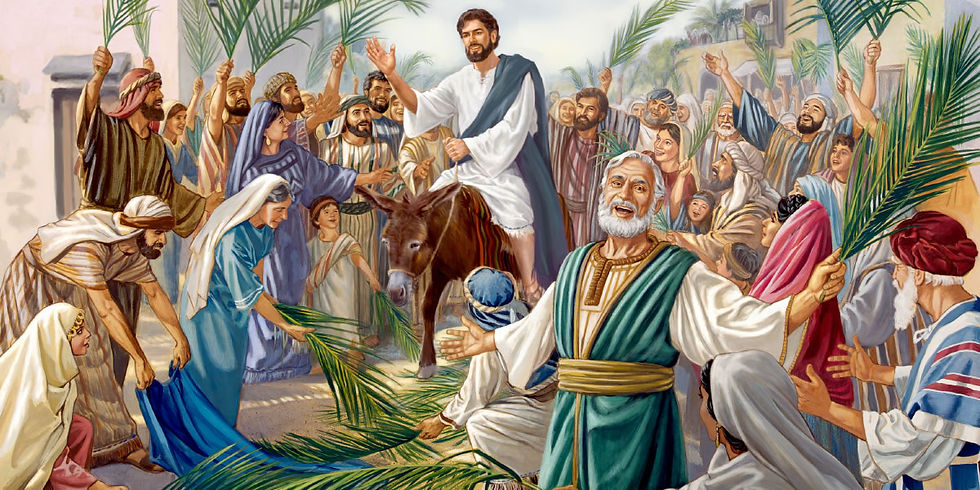
𝐀𝐏𝐑𝐈𝐋 𝟏𝟑, 𝟐𝟎𝟐𝟓: 𝐏𝐀𝐋𝐌 𝐒𝐔𝐍𝐃𝐀𝐘
𝐅𝐢𝐫𝐬𝐭 𝐑𝐞𝐚𝐝𝐢𝐧𝐠: 𝐈𝐬𝐚 𝟓𝟎:𝟒-𝟕
𝐑𝐞𝐬𝐩𝐨𝐧𝐬𝐨𝐫𝐢𝐚𝐥 𝐏𝐬𝐚𝐥𝐦: 𝐏𝐬𝐚 𝟐𝟐:𝟖-𝟗, 𝟏𝟕-𝟐𝟎, 𝟐𝟑-𝟐𝟒 “𝐌𝐲 𝐆𝐨𝐝, 𝐌𝐲 𝐆𝐨𝐝, 𝐰𝐡𝐲 𝐡𝐚𝐯𝐞 𝐲𝐨𝐮 𝐚𝐛𝐚𝐧𝐝𝐨𝐧𝐞𝐝 𝐦𝐞?”
𝐒𝐞𝐜𝐨𝐧𝐝 𝐑𝐞𝐚𝐝𝐢𝐧𝐠: 𝐏𝐡𝐢 𝟐:𝟔-𝟏𝟏
𝐆𝐎𝐒𝐏𝐄𝐋: 𝐋𝐊 𝟐𝟑:𝟏-𝟒𝟗 𝐨𝐫 𝐋𝐊 𝟐𝟐:𝟏𝟒-𝟐𝟑:𝟓𝟔
𝐊𝐞𝐲 𝐕𝐞𝐫𝐬𝐞: “𝐅𝐚𝐭𝐡𝐞𝐫, 𝐢𝐧𝐭𝐨 𝐲𝐨𝐮𝐫 𝐡𝐚𝐧𝐝𝐬 𝐈 𝐜𝐨𝐦𝐦𝐞𝐧𝐝 𝐦𝐲 𝐬𝐩𝐢𝐫𝐢𝐭.” (𝐋𝐤 𝟐𝟐:𝟒𝟔)
Today is Palm Sunday and in the liturgical calendar of the Catholic Church it ushers in the Holy Week. However, if we go by the Scriptures, we will see that Jesus’s triumphal entry to Jerusalem (𝐌𝐚𝐭𝐭 𝟐𝟏:𝟏-𝟏𝟏; 𝐌𝐤 𝟏𝟏:𝟏-𝟏𝟏; 𝐋𝐤 𝟏𝟗:𝟐𝟖-𝟒𝟒) happened way ahead of his actual passion and death.
There are also two Gospel readings that you can all reflect upon for this Sunday – 𝐋𝐤 𝟐𝟑:𝟏-𝟒𝟗 𝐨𝐫 𝐋𝐤 𝟐𝟐:𝟏𝟒-𝟐𝟑:𝟓𝟔 which speak of the trial of Jesus and his crucifixion and death on the cross.
There is another Gospel passage that is somewhat relevant to this passage from Luke, and this is from 𝐌𝐤 𝟏𝟒:𝟏-𝟏𝟓, 𝟒𝟕 which was about the love expressed by Mary who anointed the feet of Jesus with expensive oil that contrasts with the betrayal of Jesus by one of his Apostles Judas Iscariot.
The contrasting scenarios of love and betrayal is what we also go through in our present life. But first let me just provide you with something to reflect upon on the relevance of Palm Sunday to the Holy Week that we are about to observe.
The Church celebrates this solemn entry by the blessing of palm fronds and during the Mass the history of the Passion as related by St. Matthew is read and at times sung by the choir. During the blessing of the palms, the priest prays that God may preserve from sin and danger those who receive these palms and keep them in their homes. This is the reason why we keep and tie the blessed palms at the door of our homes.
The palm fronds being waved by the Jews when Jesus entered Jerusalem symbolize victory – the victory that Christ was to gain by His death over the devil. The procession on Palm Sunday signifies the Christian’s triumphal entry into heaven. And when the priest knocks three times at the door of the church with the processional cross, then it is opened, to show that only through trials and tribulations can we enter the gate of heaven and be admitted to the realms of heavenly joy.
Some have found fault in our traditions that they claim are against what Jesus preached but the reality is that these traditions are what make our Catholic faith unique because these traditions unites us with what Our Lord Jesus Christ went through and our salvation is dependent on the unanimity of our persona with that of Christ and this was the prayer of Jesus at Gethsemane “𝒔𝒐 𝒕𝒉𝒂𝒕 𝒕𝒉𝒆𝒚 𝒎𝒂𝒚 𝒃𝒆 𝒐𝒏𝒆 𝒂𝒔 𝒘𝒆 𝒂𝒓𝒆 𝒐𝒏𝒆.” (𝑱𝒏 17:11)
The scenario depicted in 𝐌𝐤 𝟏𝟒:𝟏-𝟏𝟓 shows us the glaring comparison between our love for God (as exemplified by Mary) and our own betrayal as mentioned in 𝐋𝐤 𝟐𝟐:𝟒𝟕-𝟒𝟖 (as exhibited by Judas) that separates us from God. On one hand, we see Mary bringing out the flask with the expensive oil (a year’s wages of an ordinary working man in those days) to anoint the feet of Jesus.
The Apostles even reprimanded Mary because the oil was truly expensive, and they could have sold it to either finance their travel or given to the poor. The relevance to our own situation is seen in the way Jesus reacted: “𝑺𝒉𝒆 𝒉𝒂𝒔 𝒅𝒐𝒏𝒆 𝒂 𝒃𝒆𝒂𝒖𝒕𝒊𝒇𝒖𝒍 𝒕𝒉𝒊𝒏𝒈 𝒕𝒐 𝒎𝒆. 𝑻𝒉𝒆 𝒑𝒐𝒐𝒓 𝒚𝒐𝒖 𝒘𝒊𝒍𝒍 𝒂𝒍𝒘𝒂𝒚𝒔 𝒉𝒂𝒗𝒆 𝒘𝒊𝒕𝒉 𝒚𝒐𝒖 𝒂𝒏𝒅 𝒚𝒐𝒖 𝒄𝒂𝒏 𝒉𝒆𝒍𝒑 𝒕𝒉𝒆𝒎 𝒂𝒏𝒚𝒕𝒊𝒎𝒆 𝒚𝒐𝒖 𝒘𝒂𝒏𝒕. 𝑺𝒉𝒆 𝒅𝒊𝒅 𝒘𝒉𝒂𝒕 𝒔𝒉𝒆 𝒄𝒐𝒖𝒍𝒅. 𝑺𝒉𝒆 𝒑𝒐𝒖𝒓𝒆𝒅 𝒑𝒆𝒓𝒇𝒖𝒎𝒆 𝒐𝒏 𝒎𝒚 𝒃𝒐𝒅𝒚 𝒃𝒆𝒇𝒐𝒓𝒆𝒉𝒂𝒏𝒅 𝒕𝒐 𝒑𝒓𝒆𝒑𝒂𝒓𝒆 𝒇𝒐𝒓 𝒎𝒚 𝒃𝒖𝒓𝒊𝒂𝒍.” (𝒗𝒗.6-8)
The reality is that anything we do for the least of our brethren is a beautiful thing for God. Like Mary, we are anointing Jesus when we give not just our best but everything that we have. The Apostles said it was a waste but not to the One who was honored by Mary. Today, Jesus is no longer present, but we are.
This Holy Week, we can probably ask ourselves what act of worship can we give while we still have the opportunity to do so? This brings us to the question of how we honor Our Lord. Do we faithfully give tithes and love offerings? Do we make use of our time, talent and treasure to serve him even when it is inconvenient for us? Jesus Himself gives us a clue when he credited Mary for “𝒅𝒐𝒊𝒏𝒈 𝒂 𝒃𝒆𝒂𝒖𝒕𝒊𝒇𝒖𝒍 𝒕𝒉𝒊𝒏𝒈 𝒕𝒐 𝒎𝒆” (𝒗.6).
In other words, genuine humble service is what pleases the Lord, and which also makes us holy in his sight. This calls for the total surrender of ourselves to Christ and let this yielding of our sinful nature to Christ be the palm fronds in our hands that symbolize our victory over the world that signifies our triumphal entry into heaven especially in the light of the passion and death of Christ (𝐋𝐤 𝟐𝟐:𝟏𝟒-𝟐𝟑:𝟓𝟔) for our sakes.
The Gospel today also presents to us a contrasting view of the treacherous act of Judas. There have been many assumptions as to why Judas betrayed his own Master. It may have been motivated by greed, bitter disappointment with Jesus or hatred because of disillusionment? It may be that Judas never intended for his Master to die. Maybe he thought Jesus was not being aggressive enough in setting up his messianic kingdom. Perhaps Judas wanted to force Jesus' hand by compelling him to act.
Nonetheless, his tragedy was his refusal to accept Jesus as he was. In the same way, there are times when we too are tempted to use God for our own purposes. Many times, we pray to God and fit Him into our situation. We pray and expect God to agree to what we want. There is in us a tendency to change God’s way of thinking, utterly forgetting that it is us who must be changed by Him.
We may not be aware of it but there is a Judas in us whenever we allow iniquity and transgression into our hearts. Every sin we commit is an act of betrayal to Our Lord. In as much as we can do a beautiful thing for Christ when we are able to help the poor, we can also be as cunning as Judas and plant the kiss of death on Jesus whenever we sin.
As the anointing of Jesus by Mary gives us the right perspective of what is pleasing to God, we must also view the treacherous act of Judas as a favor because it leads us to rethink and reassess our commitment to God and his presence in our lives through the Holy Spirit. This Holy Week is an opportune time to ask whether we have become true disciples or uncommitted pretenders?
This week, let us dwell on the life of Christ and this Gospel reading should help us decide. We can choose despair and death, or we can choose repentance, forgiveness, hope and eternal life. The betrayal of Judas sent Jesus to the cross but his death on the cross also gave us an opportunity to avail of his gift of salvation. In truth, sharing in the suffering of Christ is an opportunity for us to reform our lives that we may be pleasing and acceptable in his sight.
Will we accept this gift that was paid for by his life? Or are we going to persist in betraying him like Judas? This Holy Week presents us with the opportunity to pass over from death (sinfulness) to life (salvation). Are we going to going to accept it or reject it? The choice is yours. (𝘌𝘥 𝘔𝘢𝘭𝘢𝘺 – 𝘈𝘱𝘳𝘪𝘭 13, 2025)


Comments